Introduction
Artificial Intelligence is no longer a futuristic prediction; it is a present reality shaping everyday decisions. Machines recommend what we watch, assist doctors in diagnosing illnesses, guide self-driving vehicles, and even screen job applicants. In many situations, machines now play roles that once belonged only to human judgement.
As machine intelligence continues to develop, it raises deep questions. Not only can machines make decisions, but the question is should they? And if they do, how do we make sure those decisions are ethical?
These questions form the foundation of machine ethics, an area where computer science meets philosophy, morality, law, and social responsibility. An ethical approach to AI is not optional, it is necessary for protecting human dignity and building a fair society in a rapidly advancing technological world.
What Is Machine Ethics?

Machine ethics is the study of how intelligent systems should make decisions and what moral rules should guide them. Traditional machines performed tasks controlled by humans. AI however performs tasks based on algorithms, predictions, and patterns learned from data.
When a machine predicts the outcome of a medical treatment, recommends punishment in a legal system, or decides who qualifies for a loan, it participates in moral decision-making even if unintentionally.
Understanding AI and Morality
Human morality is shaped by a combination of culture, experience, religion, empathy, and emotions. From childhood, we learn the difference between right and wrong through interactions with others, experiencing consequences of our choices, developing emotional awareness, and growing up within a society that teaches rules and values. Our moral compass is deeply connected to feelings like guilt, compassion, and kindness. These emotional and social experiences allow us to reflect on our actions and decide how to behave responsibly.
Machines however are fundamentally different. They learn from data, not experience. They do not feel guilt, empathy, sadness, or joy. They do not understand human suffering. Instead, they identify patterns and make decisions based on pre-programmed instructions or rules learned from data. This leads to a challenging question:
Can ethics exist without emotions?
Some philosophers argue that morality requires intention and feeling, qualities that machines lack. In this view, because machines do not have consciousness or emotions they cannot truly be moral. Others suggest that morality could be measured by action and outcome rather than emotion, meaning a machine could technically behave ethically even if it does not “understand” what ethics are.
There are three main viewpoints philosophers debate regarding AI and morality:
1. Machines cannot be moral
This perspective argues that morality requires consciousness, reflection, understanding of suffering, and responsibility. Machines lack these qualities. They cannot truly “choose”, they only follow commands, which means they cannot have moral understanding in the human sense.
2. Machines can behave morally
If we define morality based on rules or achieving good outcomes, machines can act ethically. They can
- Avoid causing harm
- Follow established ethical guidelines
- Treat people fairly
- Avoid discrimination
In some cases, machines might even behave more ethically than humans, because they are not influenced by anger, fear, jealousy, tradition, or cultural biases. For example, a hiring AI could evaluate candidates purely based on skills if programmed correctly, without letting unconscious prejudice interfere.
3. Machines can simulate morality
Machines might appear moral because they follow rules designed to mimic ethical behavior. However, this is imitation, not understanding. The AI may follow moral patterns but cannot comprehend the meaning behind them. This raises deeper philosophical questions: if morality is only simulated, is it truly ethical, or just an appearance of ethics?
Responsibility (Who Is to Blame)
Ethical questions are not limited to whether AI can be moral—they also involve accountability. If an AI system makes a mistake, such as a self-driving car causing an accident or an AI falsely accusing someone of fraud, the question becomes:
- Is it the developer’s fault?
- Is it the company deploying the AI?
- Is it the user’s responsibility?
Or could the machine itself be blamed?
AI acts without intentions or understanding, which means machines, cannot be held responsible. The responsibility lies with humans like the developers, companies, and regulators. This is why ethical responsibility must be integrated into AI design, testing, and deployment, not added as an afterthought.
Bias and Discrimination in AI
One of the most serious ethical challenges is algorithmic bias. AI systems learn from data. If the data reflects stereotypes or discrimination, AI can reproduce and amplify these biases, sometimes on a massive scale. Examples include:
- Hiring systems favoring certain genders
- Predictive policing unfairly targeting specific communities
- Medical algorithms misdiagnosing certain populations
- Loan approval systems discriminating against marginalized groups
Unlike human bias, which may affect a few people, biased AI can affect thousands or millions at once. Preventing bias requires careful checking of data, transparency in AI decisions, Fairness testing, Diverse teams in AI development and continuous auditing and oversight. Bias in AI is not a technical error, it is a social and ethical issue.
Ethical Decision-Making in Autonomous Machines
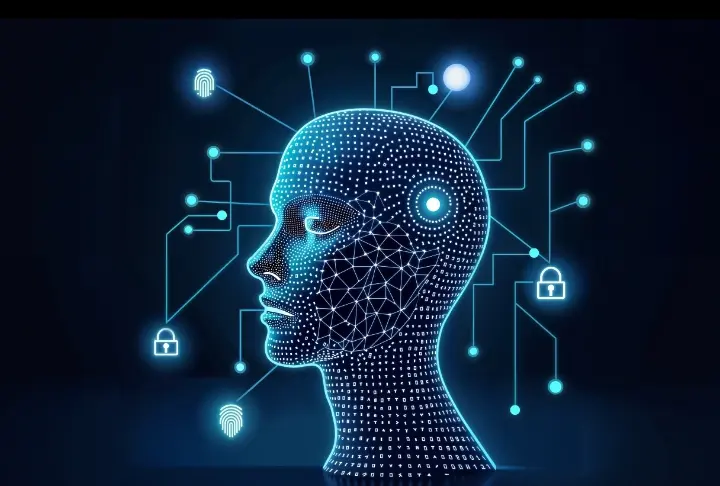
AI systems depend heavily on data, sometimes millions of pieces of personal information. However, this raises serious concerns about how that data is handled. Important questions include: Who actually owns the information being collected? How is it stored and protected? And for what exact purpose is it being used?
For AI to be ethical, it must follow strong privacy principles. This includes being transparent about how data is collected and applied, protecting personal information from misuse, giving individuals control over their own data, and limiting any form of monitoring to necessary and lawful situations.
Without ethical guidelines, AI could easily become a tool for governments or corporations to track people, influence decisions, or even control societies. This is why privacy and responsible data use are central issues in today’s digital world.
AI and Human Identity
Artificial Intelligence is developing quickly, and as machines perform tasks once done only by humans, we begin asking what it truly means to be human. Intelligence used to be considered the main quality that made us unique, but AI can now translate languages, solve problems, diagnose medical issues, and even create art. This means human identity must be based on more than intelligence alone.
AI processes information, but it has no emotions, memories, or personal experiences. Humans think with feelings, meaning, and consciousness, while AI simply analyzes data. In creativity, AI can produce music or images, but without emotional understanding. Human creativity comes from culture, experience, and personal stories.
Another key difference is emotional intelligence—humans can love, care, empathize, and respond with compassion. Instead of making humans less important, AI challenges us to focus on qualities machines cannot replace, such as emotional depth, creativity, and moral values.
AI does not destroy human identity; it challenges us to define it more clearly. Human uniqueness does not come only from intelligence, but from emotions, consciousness, creativity, and moral understanding. As AI grows more powerful, humans are encouraged to focus on the qualities that machines cannot imitate. In this way, AI actually reminds us of the deeper meaning of being human.
Why Ethical AI Matters
When we talk about Artificial Intelligence, most people think about robots, smart apps, or machines that can think for themselves. But there’s a deeper question we must ask: what values guide these intelligent systems? That’s where ethical AI comes in.
Think of ethical AI as a set of principles that makes technology work with humanity instead of working against us. It is what makes AI respectful, safe, fair, and responsible. Without ethics, technology might grow fast, but it won’t necessarily grow in a way that protects people.
Firstly, Ethical AI protects human dignity, Every person deserves respect. Technology should never treat people as objects, or make decisions that humiliate, exclude, or label humans unfairly.
Secondly, Ethical AI also promotes fairness. That means AI shouldn’t favor one group over another, or make biased conclusions because of someone’s skin color, gender, tribe, or background. Many AI systems learn from data, and if that data contains bias the AI may behave unfairly, Ethics helps stop that.
Thirdly, Ethics also encourages equality. We don’t want technology that benefits only rich countries, large companies, or powerful individuals. AI helps everyone, not just a selected group.
Most importantly, ethical AI always remains under human control. Human beings must make the final decisions, not machines. AI should assist humans, not replace human judgment or responsibility. When AI is ethical, it becomes something that benefits the world, improves education, supports better healthcare, solves problems, and makes life easier for everyone.
But let’s also be honest if we ignore ethics, things could go wrong quickly. AI could make inequality worse. It could encourage discrimination. It could take away privacy. It could make powerful people more powerful, and leave ordinary people with less control over their lives.
That’s why ethics must stay at the center of technological development. We don’t want a future controlled by machines we want a future guided by human values. Technology should help us become better not more divided.
So as we continue to build smarter systems, ethical thinking guides our every step. Because technology is powerful, but ethics is what makes it truly human.
Conclusion
Machine intelligence is one of the most transformative inventions in history, offering huge opportunities but also raising serious ethical concerns. The main question today is not whether machines can think, but how they should act and who decides the rules that guide them. As AI becomes more involved in healthcare, education, business, and daily life, issues such as privacy, fairness, and accountability must be treated with urgency.
Ethical AI should protect human dignity, prevent discrimination, and ensure that decisions made by machines are transparent and responsible. Technology should support human judgment, not replace it. Governments, companies, developers, and users all share responsibility in shaping how AI is designed and used.
If ethics guide innovation, AI can help solve major global problems. But if we ignore ethics, technology may advance faster than our ability to control it. The future of AI ultimately depends on our moral choices and commitment to protecting what makes us human.